DIY Microcement Coffee Table: Modern Brutalist Stone Finish
Are you dreaming of a high-end, brutalist-inspired coffee table but balking at the price tag? You can achieve that coveted modern stone finish right at home. This guide will show you how to create a stunning DIY microcement coffee table, transforming a simple timber frame into a seamless, concrete-look masterpiece without the heavy lifting.
Microcement offers a sophisticated, durable surface that perfectly mimics the raw beauty of concrete, yet it’s lightweight and easy to work with. Get ready to elevate your living space with a custom piece that exudes contemporary elegance and a touch of industrial chic.

Brutalist and Minimalist Stone Trends in Contemporary Interiors
The allure of brutalist design, with its raw textures and monumental forms, has made a powerful comeback in modern interiors. Homeowners and designers alike are embracing the authenticity of materials like concrete and stone. This aesthetic isn’t about harshness; rather, it’s about creating a sense of grounded tranquility and sophisticated minimalism. A microcement coffee table perfectly captures this trending design ethos, offering a seamless, sculptural element to any room.
This style also aligns beautifully with the broader appeal of organic modern style, which blends natural materials, earthy tones, and refined simplicity. Your DIY creation will become a focal point, reflecting a commitment to thoughtful design and a curated living space.
What is Microcement and Why is It Superior to Heavy Concrete?
Microcement is a polymer-modified cement-based coating applied in thin layers, offering a smooth, continuous surface without joints. Unlike traditional concrete, it’s incredibly lightweight and versatile. You can apply it over almost any stable surface, including wood, tile, or plaster, making it ideal for transforming existing furniture.
The key advantages are clear. Microcement eliminates the need for heavy, messy concrete mixing and curing. It’s also much thinner, preventing structural strain on your furniture base. Plus, its inherent flexibility means it’s less prone to cracking than poured concrete. This makes it a superior choice for a multi functional furniture piece like a coffee table.
Troweling Thin Scratch Coats and Base Coats for Texture
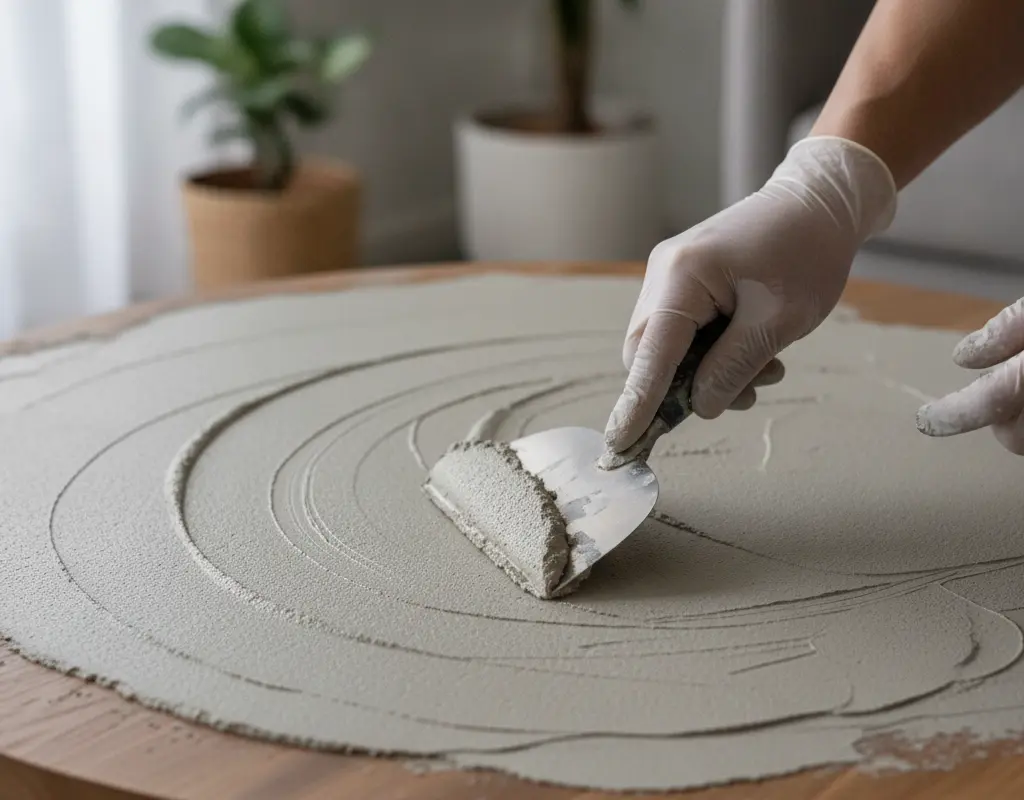
The application process begins with preparing your existing coffee table frame. Ensure it’s clean, stable, and primed correctly for adhesion. Next, you’ll apply a thin scratch coat of microcement, carefully working it across the entire surface with a trowel. This initial layer creates a crucial bond and establishes the foundational texture.
Once the scratch coat is dry, you’ll apply one or two base coats. Each layer should be thin and even, building up the desired thickness and surface consistency. Varying your trowel strokes slightly can introduce subtle, natural-looking variations, giving your table an authentic, hand-crafted concrete appearance. Much like our DIY Roman Clay table project, patience in layering is key for a professional finish.
Fine Orbital Sanding for a Smooth, Polished Concrete Touch
After your base coats have fully cured, the magic of refinement begins with sanding. Using an orbital sander with progressively finer grits – starting perhaps around 120-grit and moving up to 220-grit or even finer – will smooth out any imperfections. This step is crucial for achieving that signature polished concrete feel.
Sanding not only refines the texture but also enhances the visual depth of the microcement. Take your time and work systematically, ensuring an even finish across all surfaces. The goal is a touchably smooth yet visually dynamic brutalist stone surface. According to Architectural Digest’s insights on Microcement Design Trends, the tactile quality of these finishes is paramount to their appeal.
Applying Two-Part Polyurethane Sealers for Stain Proofing
The final, essential step is sealing your microcement coffee table. This protects your hard work and ensures durability against spills and daily wear. A high-quality two-part polyurethane sealer is highly recommended for its superior resistance to water, stains, and abrasions.
- Mix the two components of your sealer precisely according to the manufacturer’s instructions.
- Apply the first coat thinly and evenly with a roller or brush, allowing it to dry completely.
- Lightly sand with a very fine grit (e.g., 400-grit) between coats for optimal adhesion and a smoother final feel.
- Apply a second, and possibly a third, coat for maximum protection.
This sealing process makes your new table not only beautiful but also incredibly practical and easy to maintain, ready for you to style like an interior designer.
Conclusion
Creating your own DIY microcement coffee table is a rewarding project that delivers high-impact style without the typical costs or challenges of working with heavy concrete. You’ve transformed a simple piece of furniture into a sophisticated, modern brutalist statement, perfectly reflecting contemporary design sensibilities.
Enjoy the satisfaction of crafting a unique, durable, and stylish centerpiece for your living room. This project proves that high-end design is accessible, allowing you to infuse your home with personalized luxury and an undeniable touch of architectural elegance.